Highlights:
- Updated Victorian SDA residency rules provide clearer agreements, notices, reporting responsibilities, and protections.
- SDA pricing remains separate from SIL, personal care, and other in-home support funding.
- Greater focus on accessible housing helps participants find homes supporting safety and independence.
- Personalised planning helps participants align accommodation choices with goals, preferences, and support needs.
If your loved one is an eligible NDIS participant, SDA or Specialist Disability Accommodation can provide housing designed for people with extreme functional impairment or very high support needs. Several important developments are shaping the ways SDA accommodation in Melbourne works in 2026. It ranges from updated Victorian residency rules to current SDA pricing arrangements and ongoing reviews of design standards. In this blog, we will help you understand these changes to help participants make informed decisions about the home and support options.
Changes in SDA Accommodation in Melbourne Help Participants Make Informed Decisions
Updated SDA Residency Rules
An updated SDA residency rule is one of the most significant changes that came into effect on 1st July 2026. From this time, Victorian SDA laws include updates relating to residency agreements, rent notices, reporting responsibilities and the validation of certain older SDA agreements. This evolution is intended to provide clearer processes for residents and support people and providers. Participants need to understand their agreement and ask questions before entering into a new accommodation arrangement.
SDA Pricing Arrangements
Pricing is an important part of the broader SDA system. Participants should remember that SDA funding is different from funding for personal care, SIL and other in-home supports. Understanding these distinctions can make it easier to plan for the right combination of professional disability services. As 2026 brings broader changes to the NDIS, participants in Melbourne may need to pay closer attention to planning, funding, and accommodation choices.
Greater Focus on Suitable and Accessible Housing
Finding accommodation that genuinely suits their functional needs and long-term goals is one of the most important considerations for participants. SDA is typically intended for eligible people with extreme functional impairment or very high support needs. Keep in mind, it is not just a general housing option. This makes early planning, professional assessments and communication with support networks especially valuable. The main goal is not to find a place to live but to find an environment that promotes safety, accessibility, choice and independence.
Personalised Planning
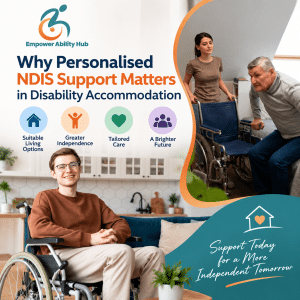
Every participant has different goals, preferences and support requirements. This significantly highlights the role of NDIS in providing personalised disability services that consider how accommodation works alongside other funded supports. If a participant chooses SDA, that person should consider their long-term housing needs, preferred location, level of independence and the support required at home. Working with our expert NDIS providers and support coordinators can help make this process easier.
What Participants Should Do Next
Not every accommodation requires SDA funding. Participants should review their current plan, discuss changing needs with their support network and ensure they understand any residency agreement before moving into an SDA property. In Melbourne, Empower Ability Hub helps participants explore accommodation options that suit their lifestyle, goals and support needs. It is also important to consider how housing funding will work alongside daily living and personal support services.
As 2026 brings further changes and developments across the disability sector. Staying informed can help participants make choices with greater confidence. The right SDA arrangement should support safety, accessibility, independence and personal goals while creating a home environment comfortable and suitable for everyday life. Feel free to contact us and discuss your circumstances and next steps.